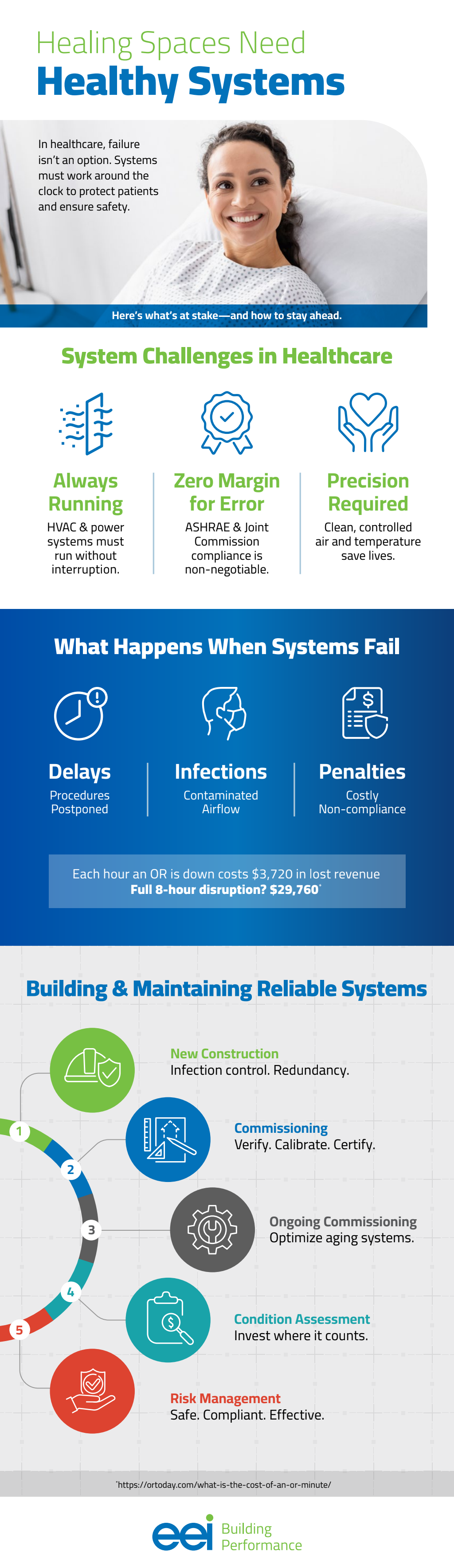
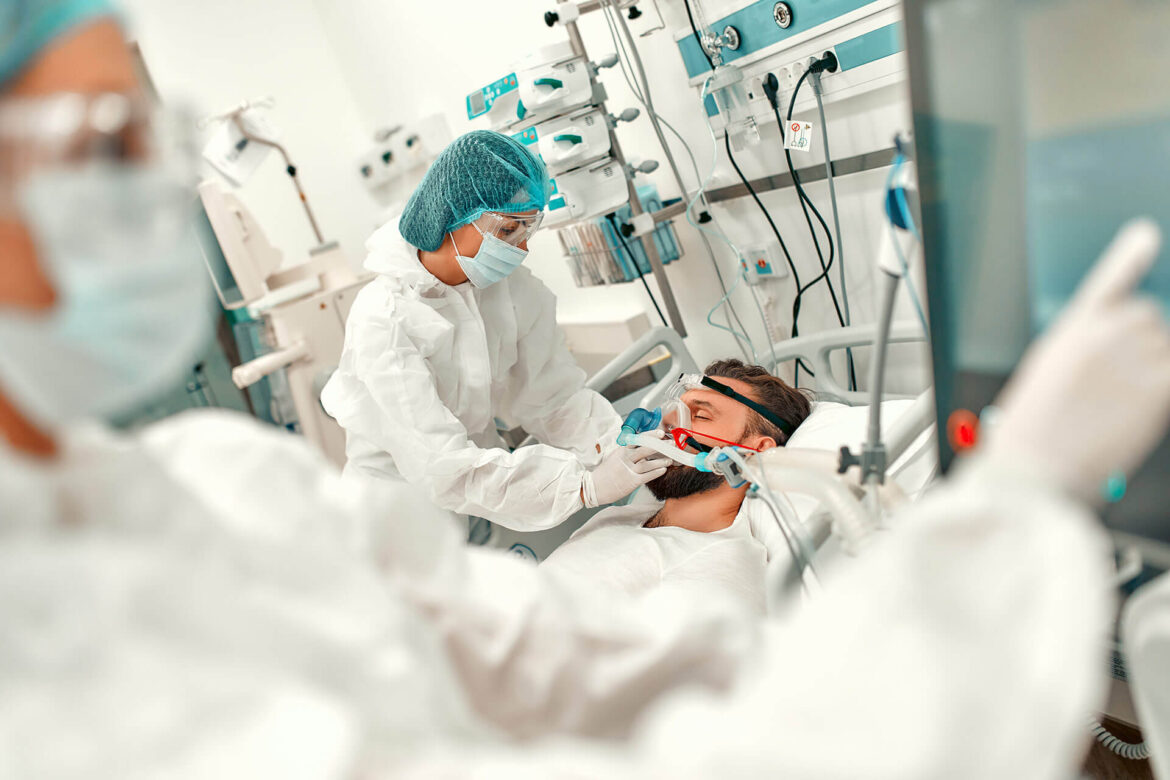

Hospitals and clinics are built to support recovery, deliver accurate treatment, and protect everyone inside their walls. While clinical expertise and technology are highly visible, the systems that quietly sustain these environments are just as critical. HVAC, electrical networks, pressure control, and air filtration form the backbone of safe and effective healthcare delivery. When these systems do not perform as expected, the impact is felt immediately across patient care, staff safety, and daily operations.
In healthcare settings, system failures are never minor disruptions. They can directly affect patient outcomes and place added strain on already demanding workflows. Unlike other building types, healthcare facilities operate around the clock and house sensitive equipment that depends on stable environmental conditions. Strict air quality requirements, variable occupancy, and continuous use leave little room for error. Even small fluctuations in temperature, humidity, or airflow can slow recovery, raise infection risks, or interfere with critical procedures.
read more : https://healthyuplifting.com/
Building Resilience Through Design and Monitoring
Infrastructure resilience begins at the earliest stages of planning. Design decisions made before construction have long-term consequences for system performance and flexibility. Mechanical zoning, redundancy planning, filtration strength, and pressure management must be carefully aligned with how different spaces function. Operating rooms, isolation areas, laboratories, patient rooms, and public spaces all have distinct environmental demands that cannot be addressed with a one-size-fits-all approach.
Once a facility is operational, attention to infrastructure cannot stop. Ongoing building commissioning, routine performance testing, and proactive maintenance help ensure systems continue to operate as intended. Healthcare environments are constantly changing as new equipment is introduced, departments expand, and care models evolve. Infrastructure must be capable of adjusting alongside these changes. Tools such as building analytics, diagnostics, and performance-based service agreements allow teams to identify issues early and maintain system stability over time.
Equally important is collaboration across disciplines. Facility managers, engineers, infection prevention specialists, and clinical teams each bring valuable insight into how building systems perform in real-world conditions. When these groups work together, infrastructure decisions are better informed and more closely aligned with patient and staff needs. Reliable systems depend not only on equipment, but also on the people who operate, monitor, and maintain them every day.
The ultimate purpose of healthcare infrastructure is to support clinical care without becoming a distraction. When systems function consistently, providers can focus their full attention on patients. When they fail, even briefly, priorities shift toward troubleshooting and crisis response. This is why infrastructure should be viewed as a strategic investment rather than a background expense.
Reliable building systems protect patient safety, support staff efficiency, and reinforce trust in the care environment. By prioritizing thoughtful design, continuous monitoring, and cross-functional collaboration, healthcare organizations create spaces where healing is supported at every level.
To dive deeper into how environmental systems underpin patient care, see the accompanying visual guide on healthcare infrastructure performance.
Reliable infrastructure is the backbone of safe and effective healthcare. From uninterrupted power and clean water to secure IT systems and medical equipment, strong infrastructure ensures that doctors can focus on patients without delays or risks. When systems work smoothly, hospitals become true healing spaces where care is timely, accurate, and dependable.